
Are you prepared to command massive festival arrays, design world-class recording environments, and manage complex networked audio infrastructures? The elite Diploma in Sound Engineering at the Music and Film Academy is an advanced, 18-month professional track engineered exclusively for experienced technicians, studio operators, and media professionals who want to lead the creative economy. Located at our central Nairobi CBD campus inside Information House on Hakati Road, this comprehensive program goes completely beyond baseline mixing to focus on advanced enterprise hardware. Students drop all automated consumer helpers, taking manual charge of premium live mixing setups, spatial acoustic formulas, multi-channel converter clocks, and digital audio distribution frameworks.
The modern entertainment and broadcast media sectors require rigorous, certified authority rather than casual trial-and-error. Earning your accredited Diploma in Sound Engineering proves your engineering capability to major television networks, international festival organizers, and corporate production agencies. Training inside our specialized music technology spaces follows a strict 1:1 student-to-gear framework, placing you in direct control of enterprise setups like the Behringer Wing, Midas systems, and Audinate Dante networks. Whether your objective is to steer front-of-house mixing for international touring acts, handle complex post-production acoustics, or secure state licensing for venue system deployment, this diploma offers an elite vocational gateway.
Why Pursue an Advanced Engineering Diploma?
Top-tier commercial facilities and broadcast media groups do not look for simple volume balancers—they demand audio engineers who understand soundwave physics, network clocks, three-phase power calculations, and rigorous delivery standards. A master engineer must confidently solve hardware phase drift, mitigate signal latencies, and maintain system stability under tight broadcast timelines.
By mastering surgical multi-band dynamics, timecode jam-syncing, and corporate B2B contract workflows, you build a highly lucrative, elite professional profile. If you want to evaluate alternative technical tracks or multi-disciplinary short courses, you can browse our complete music technology section for accredited sound engineering courses. Reviewing our primary sound engineering courses in kenya directory helps you analyze different study tracks to align your education perfectly with your long-term goals.
📊 Program Overview & Fee Structure
This 18-month diploma spans six intensive terms of study, matching advanced system deployment with international vocational milestones.
| Parameter | Specification |
| Course Duration | 18 Months (6 Terms) |
| Tuition Fees | KES 45,000 Per Term |
| Study Mode & Timing | Part-Time with Flexible Weekday Shift Options |
| Hardware Standard | Behringer Wing, Midas Consoles, Audinate Dante Networking |
| Vocational Frameworks | Pearson BTEC Verification & TVETA Board Licensing |
| Campus Location | Information House, Hakati Road, Nairobi CBD |
💡 Analyze Local Learning Spaces: Want to check out how our advanced music tech setups compare with peer institutions? Review our layout alongside other sound engineering schools in nairobi or view alternative visual arts choices on our hub page.
🗺️ Detailed 18-Month Curriculum Architecture
Term 1: Advanced Acoustic Physics, Studio Architecture & Digital Workstations
Students study the deep physics of wave propagation, designing isolated room layers and building hybrid studio signal configurations.
- Acoustic Physics & Wave Propagation: Calculating soundwave lengths, execution periods, and raw frequencies across varying room temperature conditions. Mapping modal distributions, standing wave nodes, and calculation boundaries within custom rectangular studio rooms. Designing professional wall isolation layers utilizing specialized resilient channels, decoupling spaces, and dense mass-loaded vinyl. Building targeted acoustic control treatments including broadband absorption panels, helmholtz resonators, and quadratic residue diffusers. Conducting precise room measurement sweeps utilizing specialized omnidirectional calibrated microphones and analytical room software. Drafting complete architectural studio floor plans optimizing control room sightlines and reflection-free zones.
- Advanced Hybrid Signal Environments: Routing high-end microphone preamplifiers through analog patch bays to hardware dynamics units and digital audio interfaces. Calibrating analog outboard equipment input/output levels to match digital workstation headrooms without introducing noise floor hiss. Managing multi-channel analog-to-digital and digital-to-analog converter word clock synchronization setups to completely eliminate jitter clicks. Configuring custom insert paths, hardware effects loops, and external side-chain paths on enterprise-tier analog consoles. Diagnosing impedance mismatches when interfacing vintage high-impedance studio gear with modern low-impedance input circuits. Designing multi-room signal paths connecting tracking spaces, isolation booths, and main control rooms via permanent wall panels.
- Precision Microphone Engineering & Phase Coherence: Utilizing specialized large-diaphragm and small-diaphragm condenser microphones, matching transient responses to instrumental characters. Deploying phase-coherent multi-microphone setups on acoustic guitar cabinets, grand pianos, and complex percussion configurations. Implementing advanced stereo microphone arrays including Blumlein pairs, mid-side configurations, and phase-aligned ORTF systems. Analyzing multi-mic phase relationships using real-time goniometers, correlation meters, and wave-alignment editing tools. Deploying specialized boundary microphones and sub-frequency capture units to capture extended low-end weight safely. Implementing strict microphone maintenance protocols including capsule cleaning, shock-mount checks, and proper storage procedures.
- Enterprise DAW Configuration & Advanced Editing: Configuring professional digital audio workstation software engines to interface seamlessly with massive multi-channel hardware networks. Creating advanced custom session templates featuring complex internal routing, pre-configured auxiliary tracks, and VCA folders. Executing lightning-fast audio editing operations utilizing key command shortcuts, multi-tool configurations, and custom macro scripts. Managing complex sample-accurate elastic audio workflows, time-stretching operations, and tempo-mapping for irregular live files. Implementing pristine sample-rate and bit-depth conversion standards when preparing session files for global mastering facilities. Building organized multi-drive data storage strategies utilizing external RAID systems and secure off-site cloud servers.
Term 2: Advanced Studio Tracking, Large-Format Desks & High-End Tuning
This term provides an immersive dive into large-format console routing matrices, multi-band dynamic controls, and precision vocal tuning pipelines.
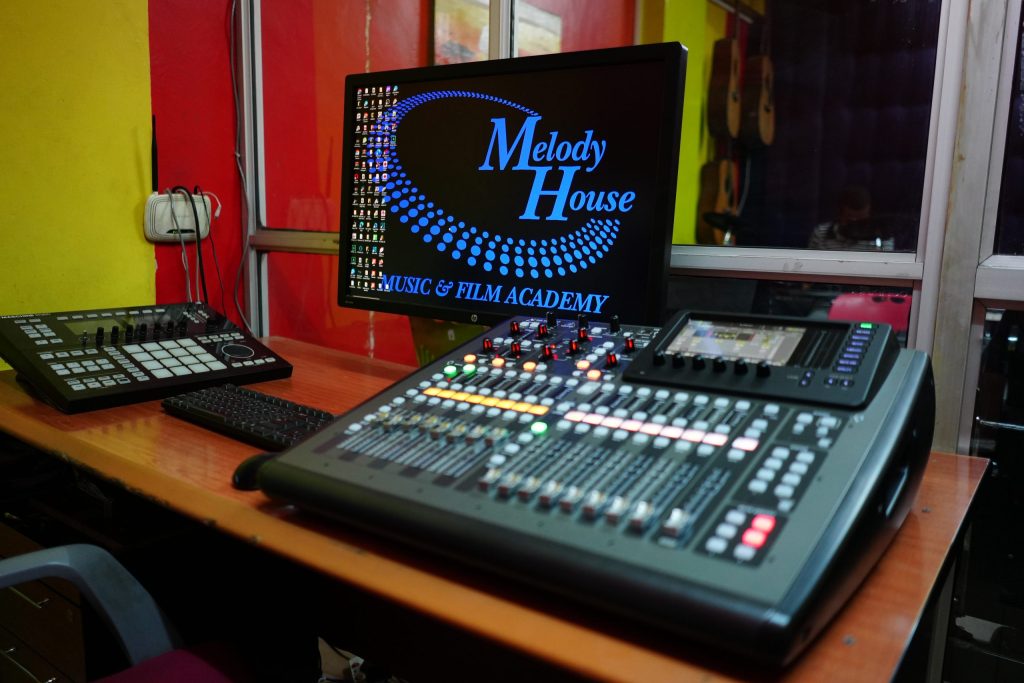
- Large-Format Digital Console Deep-Dive: Operating enterprise-tier digital consoles including the Behringer Wing and Midas platforms in complex hybrid tracking environments. Customizing surface fader layouts, touch-screen parameter screens, and user-assignable control rotary encoders. Patching digital audio networks locally across console inputs, AES50 stage boxes, and computer expansion expansion cards. Utilizing internal premium channel strip emulations including vintage British equalizers and classic tube compression profiles. Configuring complex internal bus matrices to feed multiple separate spatial monitoring setups and streaming feeds simultaneously. Managing complete system automation passes, snapshots, and scene recall safe filters during intricate multi-band performances.
- Advanced Multi-Band Dynamics & Surgical Frequency Control: Deploying multi-band compressors to isolate and control dynamic instabilities within specific target frequency bands. Utilizing hardware dynamic equalizers to surgically suppress harsh frequencies only when they exceed set threshold limits. Applying high-end brickwall limiters to maximize average loudness levels while strictly avoiding inter-sample digital clipping. Setting up advanced side-chain compression loops to automatically duck bass guitars whenever the kick drum strikes. Implementing parallel compression paths on stereo drum groups to add explosive energy while preserving natural musical transients. Utilizing precision harmonic saturators to add warmth, presence, and analog edge to cold digital recordings.
- Time-Based Effects & Advanced Spatial Modulation: Designing lush spatial fields utilizing multi-tap delays, ping-pong configurations, and complex modulated feedback paths. Customizing convolution reverbs using real-world impulse response files to place dry instruments into authentic physical spaces. Tweaking pre-delay parameters, decay curves, and damping filters within plate and hall reverbs to prevent muddy mixes. Applying subtle modulation processing including tape flanging, classic phasing, and chorus processing to widen backing vocals. Correcting phase drift tracking errors across time-shifted multi-mic configurations using specialized micro-delay alignment tools. Automating internal effects parameters across song transitions to create dramatic shifts in depth and scale.
- High-End Vocal Engineering & Tuning Architectures: Setting up multi-microphone configurations to capture wide dynamic vocalists with a main mic and safety background capsule. Executing meticulous vocal comping workflows, combining the best phrases from multiple takes into a single stellar track. Applying advanced pitch correction software including Melodyne protocols to correct pitch and timing notes transparently. Processing vocal tracks with dedicated hardware de-essers to eliminate harsh high-frequency sibilance without altering tone. Creating lush, realistic vocal harmony stacks utilizing manual pitch-shifting and specialized double-tracking tools. Mastering modern vocal production styles including crisp contemporary commercial processing and pristine wide background stacks.
Term 3: Live Sound Reinforcement, Venue Tuning & Audio Networking
Students transition to major concert setups, balancing three-phase electrical distros and routing audio data streams across Audinate Dante networks.
- Front of House (FOH) System Engineering: Utilizing professional acoustic prediction software to design optimal line-array coverage configurations for varying venue shapes. Flying large-scale line-array modules safely using heavy-duty industrial rigging hardware, chains, and motor hoists. Deploying advanced subwoofer arrays including cardioid and end-fire setups to direct low-end punch to the audience. Tuning massive venue PA setups using pink noise, transfer-function measurement software, and system alignment delays. Ringing out large performance venues using master graphic equalizers to systematically eliminate acoustic feedback nodes. Monitoring active live venue sound pressure levels (SPL) using calibrated decibel meters to protect audience hearing safety.
- Advanced Monitor Mix Architecture: Engineering complex monitor desks handling dozens of separate pre-fader auxiliary mixes for massive live performance groups. Setting up professional multi-channel wireless in-ear monitor (IEM) networks including advanced antenna distribution systems. Conducting local RF spectrum scans using specialized software to assign interference-free radio frequencies to wireless beltpacks. Crafting highly detailed independent stereo monitor profiles focusing on custom click-track routing and ambient stage mics. Managing physical side-fill and drum-fill speaker configurations on stage to deliver cohesive physical energy to performers. Communicating smoothly with high-profile artists during fast-paced live shows using discrete, private talkback loops.
- Networked Audio Distribution Systems (Dante, AES50): Configuring enterprise Audinate Dante networks, managing IP addresses, subnet configurations, and network clock leaders. Patching audio channels digitally across massive campus networks using specialized Dante Controller software tools. Deploying heavy-duty EtherCON Cat6 lines to transmit hundreds of channels of high-resolution audio across long distances. Interfacing disparate digital protocols including Dante, AES50, and MADI setups using specialized hardware network bridges. Implementing system redundancy paths by configuring secondary network lines that seamlessly take over during primary cable failures. Troubleshooting network dropouts, clocking conflicts, and latency discrepancies across complex multi-room setups.
- Power Distribution Management & Event Safety: Hooking up heavy-duty three-phase power distribution racks to venue main supplies, balancing electrical loads evenly. Measuring incoming voltages and phase currents using digital multimeters to protect sensitive digital gear from spikes. Implementing proper electrical grounding paths to entirely prevent dangerous shocks and eliminate ground loop buzzes. Calculating total system wattage draws to specify correct generator sizes for large outdoor concert festivals. Deploying heavy-duty weatherproofing solutions to protect outdoor stage lines, power distros, and mixing stations from rain. Enforcing international event safety standards regarding load ratings, secure truss builds, and emergency power cutoffs.
Term 4: Audio Post-Production, Foley & Broadcast Standards
This term details how to sync and restore dialogue for cinema, execute clean Foley assets, and master loudness channels to hit global streaming specs.
- Cinematic Post-Production & Dialogue Restoration: Synchronizing multi-channel field audio files precisely with high-definition film timelines using SMPTE timecode systems. Utilizing advanced spectral repair software to remove unwanted background clicks, wind noise, and camera hums from dialogue. Executing clean Automated Dialogue Replacement (ADR) recording loops within specialized acoustically dead dubbing stages. Balancing production dialogue tracks against background ambient beds to maintain consistent vocal presence throughout scenes. Implementing advanced phase-matching protocols when blending lavalier microphones with overhead shotgun boom tracks. Managing complex film session organization templates containing hundreds of tracks across dialogue, music, and effects.
- Sound Design & Multi-Channel Spatial Texturing: Recording custom Foley effects on dedicated foley stages utilizing various surface pits and prop asset collections. Synthesizing completely unique sci-fi sound effects, vehicle sounds, and creature vocals using advanced sound manipulation. Deploying spatial texturing tools to position sound design elements accurately across multi-channel surround sound configurations. Building rich, realistic background environments including city soundscapes, forest backdrops, and mechanical ambient textures. Utilizing sub-harmonic synthesizers to create earth-shaking sub-drops and low-end impacts for cinematic action moments. Automating multi-channel panning configurations to follow fast-moving visual elements across the cinema screen accurately.
- Broadcast & Streaming Delivery Metrics: Measuring final audio mixes against strict international loudness standards using true peak and integrated LUFS meters. Limiting master outputs to hit targeted delivery envelopes including EBU R128 (-23 LUFS) and YouTube/Spotify metrics (-14 LUFS). Managing maximum true peak limits (-1 dBTP) to prevent distortion when files are compressed into streaming codecs. Checking downmix compatibility to guarantee multi-channel surround mixes translate cleanly to standard stereo and mono speakers. Creating clean final print master tracks, including dedicated Dialogue, Music, and Effects (DME) split stem files. Embedding required broadcast metadata, timecode markings, and technical formatting specifications into final video containers.
- Media Score Integration & Soundscapes: Editing dynamic musical scores to hit specific visual action milestones and emotional beats within commercial timelines. Applying side-chain ducking configurations to automatically lower music beds whenever important dialogue occurs. Structuring sweeping low-end drones and cinematic textures to heighten tension across thriller and documentary content. Managing stereo width configurations on musical elements to leave the center image completely clear for voice tracks. Time-stretching and pitch-shifting musical cues to fit strict commercial broadcast lengths perfectly without artifacts. Organizing clear music cue sheets detailing track ownership, composer credits, and usage durations for licensing bodies.
Term 5: Creative B2B Business Models, Copyright Law & Studio Operations
Students build solid business foundations, framing technical production proposals, clearing royalties, and managing rental fleets.
- Corporate Production B2B Models & Bidding: Drafting comprehensive commercial technical production proposals, equipment hire line-items, and professional crew cost sheets. Managing detailed site surveys of corporate venues, analyzing power drops, rigging points, and acoustic obstacles. Structuring scalable corporate payment schedules, retaining deposits, and setting up strict cancellation clause terms. Negotiating technical riders with international artist management teams, sourcing specific hardware to fulfill contract rules. Pitching for lucrative state and corporate production tenders, building clean compliance documentation files. Managing event production budgets, tracking transport logistics, sub-rentals, and crew payroll sheets accurately.
- Intellectual Property, CMO Frameworks & Licensing: Registering corporate publishing rights and master recordings with global and local intellectual property protection agencies. Navigating collection distributions across local bodies including MCSK, PRISK, and KAMP to secure maximum performance royalties. Structuring legal split-sheets among studio collaborators to clearly define songwriting and production ownership percentages. Drafting comprehensive synchronization contracts for placing studio tracks into high-end TV ads and feature films. Auditing digital distribution accounting statements from international aggregators to trace global streaming payouts. Managing copyright strike issues, handling fair-use challenges, and clearing commercial sound samples legally.
- Studio Monetization & Equipment Fleet Logistics: Designing profitable commercial studio pricing matrices, including block-booking discounts and dry-hire room options. Managing high-value equipment rental fleets, tracking asset deployments, and setting up damage insurance coverages. Implementing preventive maintenance routines for high-end studio microphones, active speakers, and enterprise mixing desks. Designing optimized studio booking management frameworks to maintain peak room occupancy and track client deposits. Maximizing studio revenues by launching specialized secondary streams including equipment repairs and acoustic design consults. Tracking asset depreciation schedules, calculating equipment return-on-investment, and planning strategic gear acquisitions.
- Professional Freelance Branding & Consultancy: Launching a high-end personal brand identity as an expert independent freelance acoustic designer or sound director. Designing custom acoustic consultation portfolios complete with measurement data, architectural blueprints, and client reviews. Building optimized business platforms featuring high-quality audio showreels, video case studies, and clear contact lines. Negotiating premium freelance retainers with local media houses, production firms, and international non-profits. Implementing client relationship management systems to handle bookings, project update files, and payment tracking. Setting up independent consulting fees, calculating project timelines, and managing professional liability exposures.
Term 6: BTEC Capstone, Industry Attachment & Technical Board Licensing
The final term establishes industry readiness, combining field attachments with international portfolio checks and TVETA board licenses.
- Enterprise-Level Capstone Project: Conceptualizing a massive independent sound design project, setting up production timelines and resource allocations. Engineering the complete audio layout for a full-length feature film or recording a multi-instrument live concert album. Executing every stage of production independently, from tracking and system tuning to advanced final stereo mastering. Compiling a comprehensive production technical journal detailing hardware schematics, signal paths, and processing choices. Presenting the finalized professional audio assets to a critical review panel of active industry veterans. Defending advanced engineering choices, system designs, and artistic directions during an intense oral examination.
- External Media Industry Attachment: Securing a competitive practical internship within top-tier regional TV/radio stations or major recording houses. Operating as an active member of an external audio crew, handling real-world broadcast lines under intense timelines. Applying advanced troubleshooting techniques to fix broken lines on active sets, keeping live programming running. Adapting personal workflows to match established corporate engineering standards and complex structural pipelines. Documenting verified industry hours signed off by on-site station chief engineers and senior sound supervisors. Participating in real-world production meetings, building vital career networking lines with media executives.
- Pearson BTEC Global Portfolio Verification: Organizing all course evidence folders against the rigorous international criteria set by Pearson BTEC guidelines. Formatting technical project files, audio stems, and architectural charts into a clean, searchable digital directory. Undergoing extensive portfolio checks by visiting external international quality verifiers to confirm skills standards. Writing critical self-evaluation reports detailing personal technical development across the 18-month timeline. Resolving any technical portfolio updates required by verifiers to guarantee standard global certification compliance. Securing high-grade international vocational certificates to open up global career placements and advanced degrees.
- TVETA Board Licensing & Comprehensive Examinations: Reviewing core theoretical frameworks specified in the national TVETA sound engineering educational guidelines. Undertaking intensive practical board exams, setting up complex multi-mic systems under direct inspector review. Completing comprehensive written examinations covering acoustic engineering, signal flow math, and electrical systems. Confirming advanced mastery of local occupational safety codes and professional environmental sound limits. Earning official state licensing registration as a certified sound engineer authorized to sign off on system builds. Graduating from the Music And Film Academy, fully equipped with dual local and international credentials to lead the creative economy.
💼 Career Paths & Industry Opportunities
Graduating with an advanced Diploma in Sound Engineering positions you at the absolute tier of the audio sector, preparing you to lead engineering setups across global festival circuits, broadcast hubs, and massive installation environments:
1. Front of House (FOH) Engineer
- The Role: Commanding the global acoustic experience for massive live events, stadium concerts, and corporate conventions. You will balance complex console matrices, tune systemic PA responses, monitor active SPL limits, and manage real-world feedback nodes under live event conditions.
- Primary Industries: Global touring agencies, massive live event firms, performance arenas, and international sound hire fleets.
2. Live Sound Network Administrator (Dante / AES50 Specialist)
- The Role: Engineering digital audio networks across large multi-room spaces. You will run Audinate Dante Controller software, manage IP address assignments, maintain master word clock sync leaders, and establish secondary network redundancy safety lines to secure high-resolution digital streams.
- Primary Industries: Large broadcast corporations, mega-church complexes, multi-tier sports arenas, and temporary festival setups.
3. Systems Engineer / Line Array Rigging Specialist
- The Role: Using complex software to predict venue acoustics and design optimal coverage boundaries. You will manage heavy industrial line-array rigging, monitor load balancing calculations, and align time-delay arrays to remove acoustic null spaces.
- Primary Industries: Engineering installation firms, stadium management agencies, and major event staging networks.
4. Audio Crew Chief / Stage Technical Director
- The Role: Leading on-set audio teams, managing stage line deployments, balancing complex three-phase power racks, and coordinating cross-functional technical specifications between artist management riders and venue capabilities.
- Primary Industries: International talent coordination groups, technical production agencies, and television production sets.
5. Monitor Mix Engineer
- The Role: Sculpting targeted, frame-accurate monitoring profiles for multi-instrument live bands. You will map wireless in-ear monitor (IEM) RF spectrum distributions, configure multi-channel antenna systems, and run private talkback loops to secure performer communication.
- Primary Industries: Independent touring musical collectives, theatrical production spaces, and television broadcast event teams.
📋 Course Eligibility & Admission Thresholds
To secure full facility access and maintain our signature technical 1:1 student-to-gear ratio, all diploma applicants must satisfy the following entry metrics:
1. Primary Academic Qualifications
- KCSE Candidates: A minimum mean grade of C- (Minus) or above in the Kenya Certificate of Secondary Education (KCSE).
- TVETA Progression Track: A valid Craft Certificate in Sound Engineering (KNQF Level 5) or a matching Certificate in Music Technology from a TVETA-registered institution.
- International Equivalents: High school division credentials officially equating to national parameters by the Kenya National Qualifications Authority (KNQA).
2. Subject-Specific Recommendations & Competencies
- STEM Foundation: Due to the technical math involved in calculating modal room frequencies, acoustic physics equations, and three-phase power balances, a passing mark or performance baseline in Mathematics or Physics is highly advantageous.
- Prior Audio Literacy: Direct entry assumes fundamental operational familiarity with computers and basic audio pipelines. Self-taught recording operators, church sound technicians, or field recordists with over two years of documented industry experience may apply for competency matching via the Recognition of Prior Learning (RPL) framework.
3. Essential Enrollment Documents Checklist
Trainees cleared for technical processing must submit the following items to the registrar’s desk:
- A completed Music and Film Academy Diploma Enrollment Form.
- Certified copies of your KCSE Certificate transcripts or previous KNQF Level 5 media documents.
- A copy of your National ID Card or valid Passport.
- Two recent passport-sized color photos for the music technology registry.
- An official institutional payment receipt validating the first term’s tuition installment (KES 45,000).
❓ Frequently Asked Questions
Which enterprise-level console platforms will I master during the diploma course?
This advanced path targets multi-channel hardware networks. You will build comprehensive operational command across enterprise-tier digital systems, including the Behringer Wing and large Midas frameworks, configuring local I/O arrays and digital patch-bays manually.
What state licensing opportunities open up after graduation?
The curriculum includes national TVETA educational guidelines and environmental sound limit regulations. Upon defending your practical capstone project and completing your written examinations, you secure official state licensing registration as a certified sound engineer authorized to validate complex commercial builds.
Why is an external RAID or high-speed drive recommended for this path?
Term 4 and Term 6 involve extensive 4K cinema conformed audio, multi-channel timecode synchronizations, and uncompressed printing matrices (such as Apple ProRes 4444 delivery sets). Managing these massive file bundles safely requires independent, fast storage to ensure smooth playback performance.